Alberta geothermal planning guide
Buying a home with geothermal means assessing both the heating equipment inside and the buried system outside. Ask for records early, arrange a qualified geothermal inspection and use actual operating information to understand what you are taking over.
Discuss your projectStart with a system inventory, not the listing description
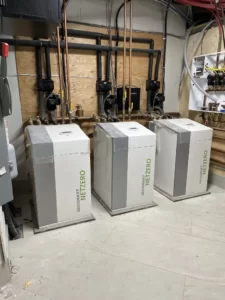
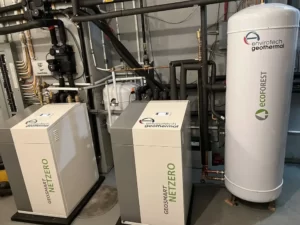
A property listing may say “geothermal” without explaining what is installed. During a viewing, ask the seller for the heat pump manufacturer, model and serial number, installation date, loop type and a description of the spaces it serves. Find out whether cooling, domestic hot water or an addition uses separate equipment.
Photograph accessible equipment labels with the seller’s permission. A tidy mechanical room is useful, but appearance alone does not establish equipment capacity, loop condition or remaining life. Your purchase checklist should distinguish documented facts from the seller’s recollection.
Our guide to how geothermal works explains the main components so you can ask more specific questions at the viewing.
Request the records that are difficult to recreate
Ask for the installation contract, available permits and inspection records, commissioning information, service invoices and equipment manuals. The ground-loop drawing is especially valuable: it should help a future contractor understand where buried piping and connections are located.
The WaterFurnace owner’s manual includes space for recording loop location. This illustrates why a property’s records matter, although the manual for the installed brand and model must guide its operation.
- Is the system closed loop, well water or another arrangement?
- Where are the loop field, headers and accessible connections?
- Who installed it, and who last serviced it?
- Have there been repairs, recurring alarms or changes to the building?

Arrange a geothermal-specific inspection
A general home inspection and a geothermal system assessment answer different questions. Ask a qualified geothermal contractor what can be inspected, measured and reported within the purchase timeline. Agree on the scope before the visit.
Useful discussion points include equipment condition, visible leaks, controls, distribution, operating history and available loop records. An inspection may have limits: buried piping cannot be assessed completely through a brief visual visit. Ask the contractor to state what was tested and what remains uncertain.
If the seller has disconnected power, the home is vacant or weather prevents a meaningful test of one mode, record that limitation. Do not treat an untested cooling or heating function as verified.
Read energy bills in the context of occupancy
Request a representative year of consumption records where the seller can provide them. Note the number of occupants, thermostat habits, heated areas and whether other major electrical loads were operating. A low bill from a lightly occupied home is not a prediction for a larger household.
Ask whether supplemental heat ran frequently and whether the property still uses another fuel. Compare consumption as well as dollars; tariffs and fixed charges can change. Our running-cost guide provides a method for organizing the information.
Check the handover before possession
Confirm which equipment and controls are included in the sale. Ask the manufacturer or service provider directly about any transferable warranty, registration requirements and exclusions; do not assume coverage transfers automatically.
Arrange a practical walkthrough: normal thermostat operation, filter location, service contact, alarm reporting and the location of documents. Remove the seller’s account access from connected controls through the manufacturer’s normal ownership-transfer process after possession.
For an Alberta property assessment, contact Envirotech Geothermal. The aim is to understand the system’s documented condition and open questions before making an equipment or renovation decision.
Common questions
Does a home inspection prove the loop is in good condition?
Not necessarily. Ask for a geothermal-specific assessment and a written explanation of what could be tested, what records were available and what remains uncertain.
Does the warranty transfer with the house?
Transfer rules depend on the manufacturer, coverage and paperwork. Confirm the installed equipment’s terms directly rather than relying on the listing.
Should I replace an older system immediately?
Age is one input. Have a qualified contractor assess condition, performance, service history and compatibility before making a replacement decision.
Related guides
Plan with Envirotech Geothermal
Bring your property details, equipment information and questions to a discussion with the Envirotech team.
Contact EnvirotechPrepared by Envirotech Geothermal Team. General planning information; the installed equipment and property need their own assessment. Sources reviewed November 17, 2026: WaterFurnace: residential owner’s manual.