
Keeping your home comfortable in every season shouldn’t mean sacrificing efficiency or sustainability. Whether it’s the bitter chill of winter or the dry summer heat, today’s homeowners are looking for better ways to balance comfort, cost, and environmental impact. That’s exactly where residential geothermal system come in.
For anyone curious about how these systems actually work, this guide will walk you through the inner workings of a residential geothermal system, how it compares to traditional heating and cooling methods, and why it’s one of the smartest long-term investments in sustainable home comfort.
Understanding the Basics of Geothermal Heat Pumps
A Geothermal Heat Pump is more than just another HVAC option—it’s a complete rethinking of how we heat and cool our homes. Instead of burning fuel or relying on fluctuating outdoor air temperatures, it uses the steady, renewable energy stored beneath the earth’s surface.
A few feet underground, the temperature remains fairly constant year-round—typically between 8°C and 12°C in most regions. Geothermal Heat Pumps tap into this stable energy source, transferring heat to or from the ground to regulate your home’s indoor climate.
In the simplest terms:
- In winter, the system extracts heat from the earth and transfers it into your home.
- In summer, it reverses the process, pulling heat from your house and depositing it back into the ground.
That’s the secret behind energy-efficient home heating and cooling with a minimal carbon footprint.
The Science Behind Ground-Source Energy
Unlike air-source heat pumps or traditional furnaces, Geothermal Heat Pumps rely on the consistent underground temperature that doesn’t fluctuate like the air does. This makes them incredibly efficient—even during Alberta’s coldest winters or hottest summers.
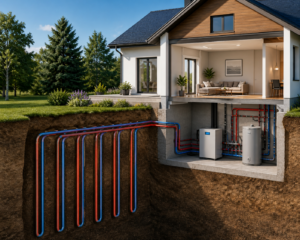
The process is powered by what’s known as a ground-source heat pump, one of the most reliable and efficient ways to capture and move heat energy. Here’s how it works:
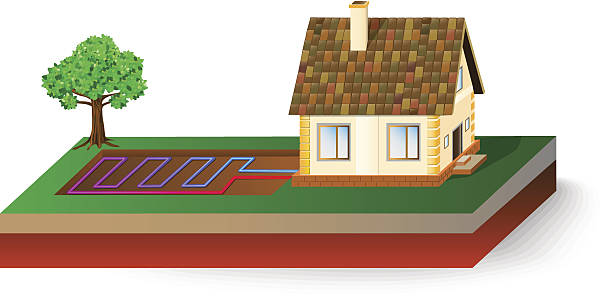
- Heat Exchange Loop: A network of underground pipes, called a “loop,” circulates a water-based solution through the earth.
- Heat Pump Unit: Inside your home, the Geothermal Heat Pump transfers heat between the loop fluid and your air distribution system.
- Distribution System: Ductwork or radiant flooring delivers the warm or cool air throughout your home.
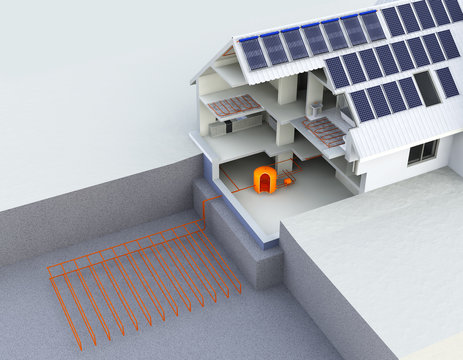
This combination of underground energy and high-efficiency technology creates a closed system that recycles energy instead of wasting it—one reason Geothermal Heat Pumps are central to eco-friendly HVAC solutions worldwide.
What Makes a Residential Geothermal System Different?
A residential geothermal system isn’t a single device—it’s a carefully designed ecosystem built for your home’s specific needs. Each installation is custom-tailored to maximize comfort and efficiency while minimizing environmental impact.
1. Underground Loop System
This is the heart of the system. Depending on your property’s layout, loops can be installed horizontally (in trenches) or vertically (in boreholes). The loop’s purpose is to exchange heat between the ground and the refrigerant circulating through your Geothermal Heat Pump.
2. Indoor Heat Pump Unit
Located inside your home, this unit contains the compressor, heat exchanger, and circulation pumps. It connects to your ductwork or radiant floor system to distribute heated or cooled air evenly throughout your home.
3. Smart Control Systems
Modern Geothermal Heat Pumps include intelligent thermostats and zoning controls, allowing homeowners to fine-tune temperatures by room or floor for maximum sustainable home comfort.
4. Long-Lasting Durability
The buried loop can last over 50 years, and the indoor unit often operates for 25 years or more—far exceeding traditional furnace or air conditioning lifespans.
Why Geothermal Heat Pumps Are So Energy Efficient
Energy efficiency is where Geothermal Heat Pumps truly shine. Unlike gas furnaces that burn fuel to create heat, geothermal systems simply move existing heat—requiring far less energy to operate.
In fact:
- For every unit of electricity consumed, a Geothermal Heat Pump delivers 3–5 units of heating or cooling energy.
- That’s up to 500% efficiency—far greater than even the best traditional HVAC systems.
This makes them one of the most effective options for energy-efficient home heating available today.
Over time, those savings add up—significantly lowering utility bills while reducing your home’s carbon footprint.
How Geothermal Heat Pumps Provide Year-Round Comfort
Comfort is about more than just temperature—it’s about consistency, air quality, and peace of mind. Geothermal Heat Pumps offer all three.
1. Consistent Indoor Temperatures
Because the ground temperature doesn’t fluctuate like the air, your residential geothermal system delivers steady warmth in winter and refreshing coolness in summer.
2. Whisper-Quiet Operation
Unlike noisy air conditioners or furnaces, Geothermal Heat Pumps operate silently. With no outdoor compressors or fans, you’ll enjoy peaceful, uninterrupted comfort.
3. Better Indoor Air Quality
Geothermal systems circulate and filter air more effectively, helping to reduce humidity, allergens, and dust—creating a healthier environment for your family.
4. Environmentally Friendly Comfort
By using renewable ground energy, these systems emit virtually no greenhouse gases, making them a cornerstone of eco-friendly HVAC design.
The Environmental Impact: A Cleaner, Greener Choice
When you install Geothermal Heat Pumps, you’re not just improving your home—you’re making a meaningful contribution to the planet.
- Lower Carbon Emissions: No combustion means no direct emissions.
- Reduced Energy Consumption: The system uses less electricity to achieve the same heating and cooling power.
- Smaller Carbon Footprint: Switching to geothermal can reduce a home’s carbon output by up to 70%.
For homeowners who care about environmental stewardship and sustainable home comfort, geothermal technology is one of the most impactful upgrades available.
Installation: What to Expect
The idea of installing underground loops might sound complicated, but for professionals like Envirotech Geothermal, it’s a smooth, well-practiced process.
Step 1: Site Evaluation
Specialists assess your property’s soil type, space, and geology to determine the best loop configuration—vertical, horizontal, or pond-based.
Step 2: Loop Installation
The loop is carefully buried underground, ensuring minimal disturbance to your landscape. Vertical installations are common in smaller yards, while horizontal loops suit rural or open properties.
Step 3: System Setup
The indoor Geothermal Heat Pump unit is installed and connected to your existing ductwork or radiant heating system.
Step 4: Testing and Calibration
Your installer tests and fine-tunes the system for optimal performance and efficiency—ensuring seamless energy-efficient home heating and cooling from day one.
Once installed, maintenance needs are minimal—making Geothermal Heat Pumps a reliable, long-term comfort solution.
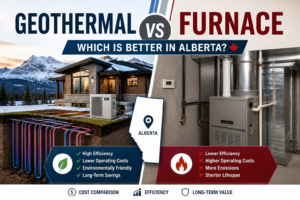
Comparing Geothermal Heat Pumps to Conventional Systems
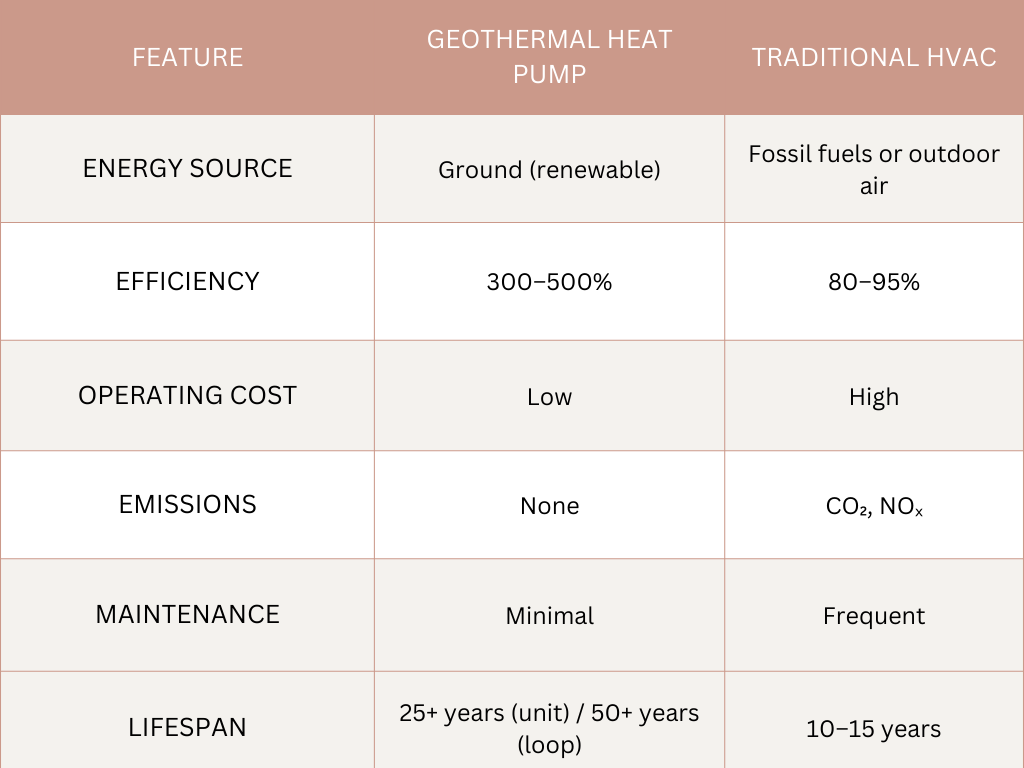
It’s easy to see why Geothermal Heat Pumps outperform conventional heating and cooling in every major category—efficiency, cost, lifespan, and sustainability.
Financial Benefits for Homeowners
Installing a residential geothermal system is not just about being environmentally conscious—it’s also a financially smart move.
1. Significant Energy Savings
Lower energy usage means lower monthly bills. Most homeowners recoup their investment within 5–10 years through home energy savings alone.
2. Increased Property Value
Homes equipped with eco-friendly HVAC systems appeal to today’s energy-conscious buyers, adding long-term resale value.
3. Federal and Local Incentives
In many regions, geothermal installations qualify for rebates, grants, and tax credits that offset upfront costs—making now the perfect time to upgrade.
4. Minimal Maintenance Costs
With fewer mechanical parts, Geothermal Heat Pumps require very little upkeep compared to traditional systems, saving you money year after year.
How Long Do Geothermal Systems Last?
One of the greatest advantages of Geothermal Heat Pumps is their longevity. The ground loop—made from durable polyethylene—can last 50 years or more, while the indoor heat pump unit typically lasts 20–25 years.
This long service life, combined with low operating costs, makes geothermal one of the most cost-effective paths to sustainable home comfort.
Myths About Geothermal Heat Pumps
Even though geothermal technology has been around for decades, a few myths still circulate. Let’s set the record straight.
“They only work in warm climates.”
False. In fact, geothermal thrives in colder regions because it draws on underground temperatures that remain constant year-round.
“They’re too expensive to install.”
While the initial investment is higher, the return on investment is exceptional thanks to energy savings, incentives, and system longevity.
“You need a large yard.”
Not true. Vertical loop installations allow Geothermal Heat Pumps to work efficiently on smaller residential lots.
“Maintenance is complicated.”
Actually, geothermal systems require less maintenance than gas furnaces or air conditioners. A yearly inspection is usually all that’s needed.
A Step Toward Sustainable Living
Adopting Geothermal Heat Pumps is more than a home upgrade—it’s a commitment to living sustainably. You’ll enjoy cleaner air, quieter operation, lower energy bills, and a reduced environmental footprint.
For families seeking sustainable home comfort that doesn’t compromise performance, geothermal represents the best of both worlds—modern technology rooted in nature’s balance.
FAQs About Geothermal Heat Pumps
1. How long does a geothermal heat pump last?
The underground loop can last up to 50 years, while the indoor unit usually lasts around 25 years with routine maintenance—significantly longer than most traditional systems.
2. Are geothermal systems noisy?
Not at all. Geothermal Heat Pumps operate quietly because they don’t rely on loud outdoor compressors or fans, making them ideal for peaceful indoor environments.
3. Can a geothermal system provide both heating and cooling?
Yes! Geothermal Heat Pumps work as reversible systems, offering both efficient heating in winter and cooling in summer—all from one compact, efficient system.
Ready to Experience True Sustainable Comfort?
Upgrading to Geothermal Heat Pumps means choosing long-term comfort, cost savings, and environmental responsibility. If you’re ready to explore how a residential geothermal system can transform your home, Envirotech Geothermal is here to help.
With decades of experience designing and installing eco-friendly HVAC solutions, we’ll ensure your system delivers unbeatable energy-efficient home heating and cooling all year round.
👉 Contact Envirotech Geothermal today to schedule your consultation and take the first step toward a smarter, greener, and more sustainable home.