
When it comes to energy-efficient home heating and cooling, one comparison stands out above the rest: Geothermal vs Air-Source Heat Pumps. As energy costs continue to rise and homeowners look for sustainable solutions, heat pumps have quickly become a top choice for modern comfort.
But choosing between these two systems isn’t just about efficiency—it’s about your climate, home size, budget, and long-term goals.
In this complete guide, we’ll break down Geothermal vs Air-Source Heat Pumps in a clear, practical, and easy-to-understand way so you can confidently decide which system is right for your home.
Understanding Heat Pumps: A Smarter Alternative to Traditional HVAC
Before diving into Geothermal vs Air-Source Heat Pumps, it’s important to understand how heat pumps work.
Traditional HVAC systems:
- Generate heat using furnaces (gas or electric)
- Use separate air conditioners for cooling
Heat pumps, however:
- Transfer heat instead of generating it
- Provide both heating and cooling in one system
This simple difference is why the Geothermal vs Air-Source Heat Pumps debate has become so important for energy-conscious homeowners.
How Heat Pumps Work (Simple Explanation)
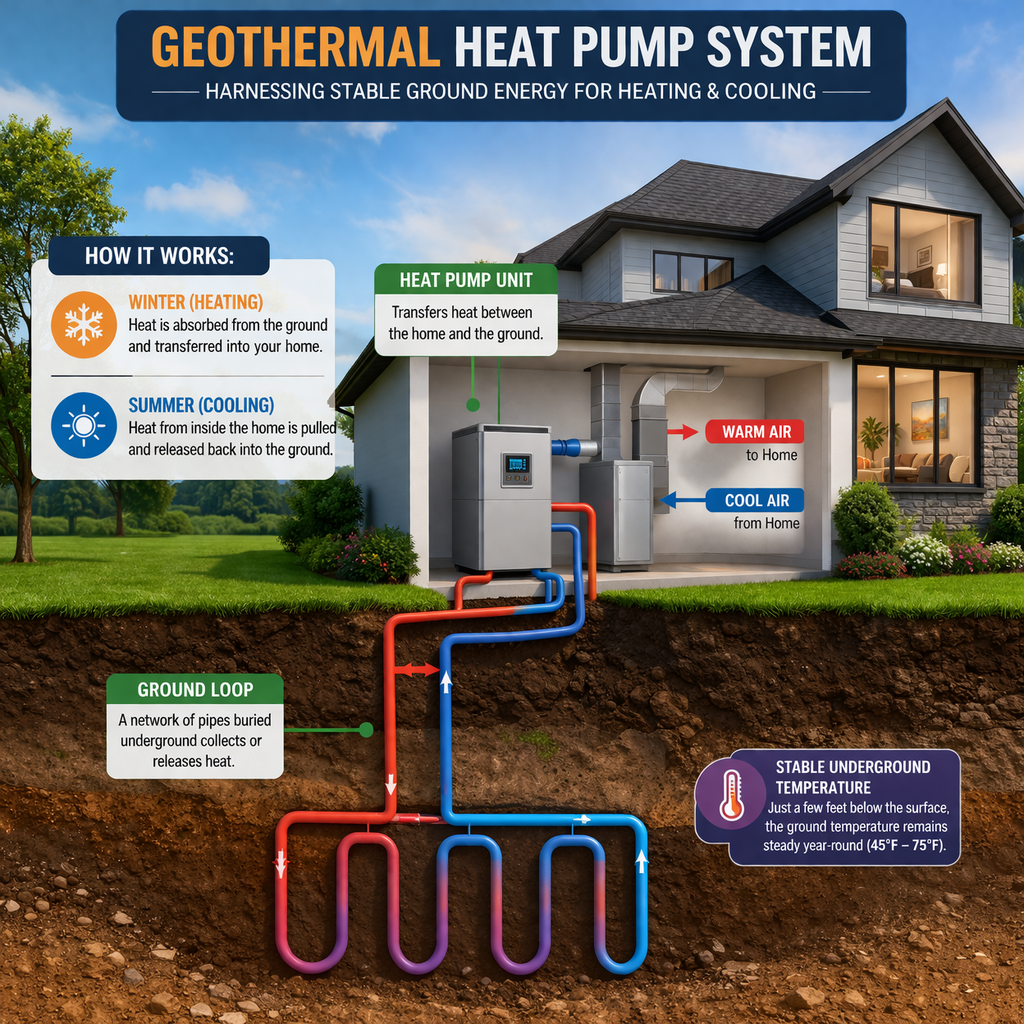
Heat pumps operate by moving heat:
- Winter: Pull heat from outside and bring it indoors
- Summer: Remove heat from inside and release it outdoors
Because they don’t create heat from scratch, they use significantly less energy—making both options in the Geothermal vs Air-Source Heat Pumps comparison highly efficient.
What Is a Geothermal Heat Pump?
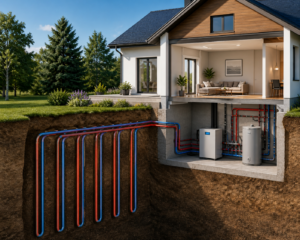
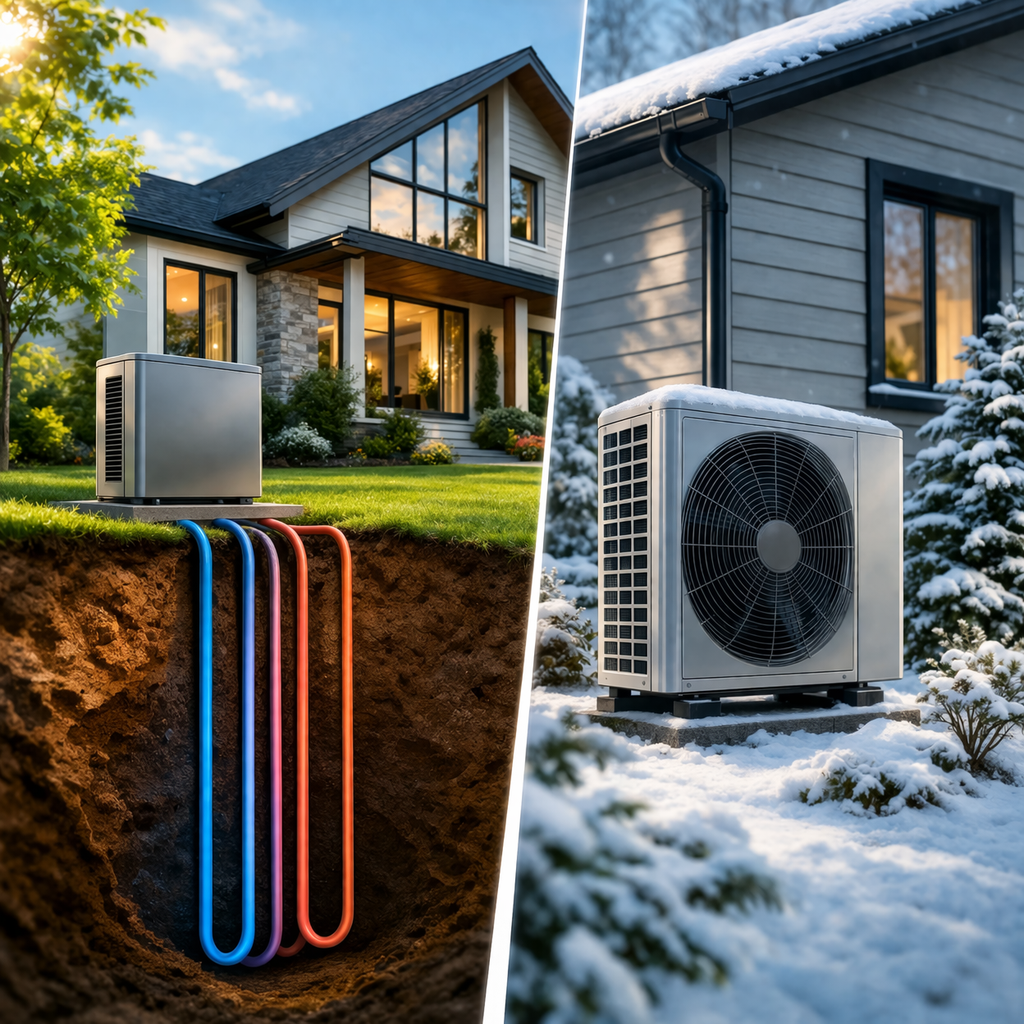
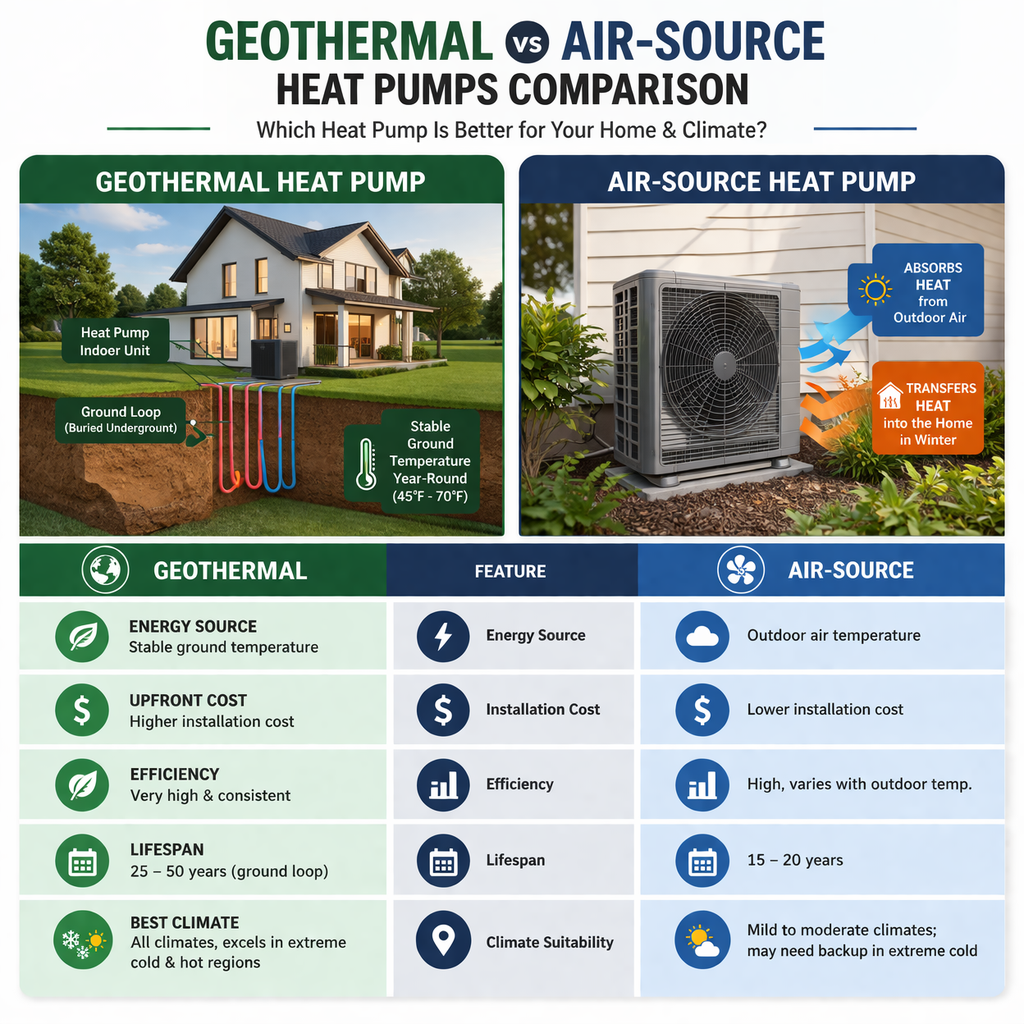
A geothermal heat pump uses the stable underground temperature to heat and cool your home. Just a few feet below the surface, temperatures remain consistent year-round.
Key Benefits of Geothermal Systems
- Extremely high energy efficiency
- Reliable performance in all climates
- Long lifespan (25–50 years for ground loops)
- Lower long-term energy costs
- Quiet operation
In the Geothermal vs Air-Source Heat Pumps comparison, geothermal systems are known for consistency and durability.
What Is an Air-Source Heat Pump?
An air-source heat pump extracts heat from the outdoor air and transfers it inside your home. In summer, it works like a standard AC system.
Benefits of Air-Source Systems
- Lower upfront installation cost
- Easier and faster installation
- High efficiency in moderate climates
- Compact and flexible design
Modern systems have significantly improved, making Geothermal vs Air-Source Heat Pumps a much closer competition than ever before.
Geothermal vs Air-Source Heat Pumps: Key Differences
1. Energy Source
- Geothermal: Uses underground temperature
- Air-Source: Uses outdoor air
This is the core difference in Geothermal vs Air-Source Heat Pumps, impacting efficiency and performance.
2. Installation Cost
Geothermal:
- Higher upfront cost due to ground loop installation
Air-Source:
- More affordable and quicker to install
When evaluating Geothermal vs Air-Source Heat Pumps, upfront cost often favors air-source systems—but that’s only part of the story.
3. Operating Costs
Geothermal systems:
- Use less electricity
- Offer stable energy bills
- Require less maintenance over time
Air-source systems:
- Still efficient, but performance varies with weather
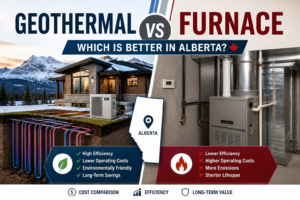
Over time, Geothermal vs Air-Source Heat Pumps often shifts in favor of geothermal due to lower lifetime costs.
Best Heat Pump for Cold Climates
Geothermal Performance
Geothermal systems:
- Are unaffected by outdoor air temperature
- Deliver consistent heating even in extreme cold
This makes them a top choice in the Geothermal vs Air-Source Heat Pumps comparison for colder regions.
Air-Source Performance
Cold-climate air-source heat pumps:
- Work well in mild winters
- May lose efficiency in extreme cold
- Often need backup heating
For harsh winters, Geothermal vs Air-Source Heat Pumps usually favors geothermal systems.
Heat Pump Climate Suitability
Best for Geothermal Systems
- Cold regions
- Hot climates
- Areas with extreme seasonal changes
Best for Air-Source Systems
- Mild to moderate climates
- Coastal regions
- Areas with shorter winters
Understanding climate is essential when comparing Geothermal vs Air-Source Heat Pumps.
Geothermal vs Air-Source Heat Pumps for Home Size
Large Homes: Why Geothermal Wins
A geothermal heat pump is ideal for larger homes because it:
- Maintains even temperatures
- Scales efficiently
- Reduces energy cost per square foot
In Geothermal vs Air-Source Heat Pumps, geothermal often delivers better value for big homes.
Small Homes: Why Air-Source Works Well
Air-source systems are great for smaller homes because they:
- Cost less upfront
- Require minimal space
- Deliver strong efficiency when properly sized
For compact spaces, Geothermal vs Air-Source Heat Pumps may favor air-source systems.
Installation Considerations
Geothermal Installation
- Requires yard space or drilling
- Longer installation time
- Higher initial investment
Air-Source Installation
- Simple outdoor unit setup
- Faster installation
- Lower upfront cost
Installation feasibility plays a big role in Geothermal vs Air-Source Heat Pumps decisions.
Maintenance and Lifespan
Geothermal Systems
- Ground loops: 25–50 years
- Indoor unit: 20–25 years
Air-Source Systems
- Average lifespan: 15–20 years
Longevity is a major advantage in the Geothermal vs Air-Source Heat Pumps comparison.
Environmental Impact
Both systems are eco-friendly, but:
Geothermal:
- Uses renewable ground energy
- Produces minimal emissions
Air-Source:
- Reduces reliance on fossil fuels
- More efficient than traditional HVAC
From a sustainability perspective, Geothermal vs Air-Source Heat Pumps strongly favors geothermal—but both are excellent choices.
Comfort and Noise Levels
Geothermal Systems
- Extremely quiet
- Stable indoor temperatures
- No outdoor unit noise
Air-Source Systems
- Quiet compared to traditional HVAC
- Slight outdoor noise present
In terms of comfort, Geothermal vs Air-Source Heat Pumps often gives geothermal a slight edge.
Which Heat Pump Is Right for You?
Choosing between Geothermal vs Air-Source Heat Pumps depends on:
- Your climate
- Home size
- Budget
- Long-term plans
Choose Geothermal If:
- You plan to stay long-term
- You live in extreme climates
- You want maximum efficiency
Choose Air-Source If:
- You want lower upfront costs
- You live in a moderate climate
- You have a smaller home
Final Thoughts on Geothermal vs Air-Source Heat Pumps
Both systems are a huge upgrade from traditional HVAC. However, when comparing Geothermal vs Air-Source Heat Pumps, the best choice ultimately depends on your specific situation.
- Geothermal = Long-term investment, highest efficiency, best for extreme climates
- Air-Source = Affordable, flexible, great for moderate climates
By understanding the differences, you can make a smart, future-proof decision for your home.
Ready to Choose the Right Heat Pump?
If you’re still deciding between Geothermal vs Air-Source Heat Pumps, getting expert advice can make all the difference.
The team at Envirotech Geothermal can help you:
- Evaluate your home and climate
- Compare system options
- Design the most efficient solution
👉 Contact them today to find the perfect heating and cooling system for your needs.
Frequently Asked Questions
Is geothermal better than air-source heat pumps?
Geothermal systems are generally more efficient and consistent, especially in extreme climates, but they come with higher upfront costs.
Are air-source heat pumps good in cold weather?
Yes, modern systems perform well, but they may require backup heating in very cold conditions.
Which system is best for large homes?
Geothermal systems are usually better for large homes due to their efficiency and scalability.
Which is more cost-effective long-term?
In most cases, geothermal systems offer lower lifetime costs despite higher installation expenses.