Rocky View County · Rural Alberta · Homeowner guide
Geothermal in Rocky View County can be a practical option for year-round heating and cooling, especially on acreages with space for a ground loop. The right design starts with your home, your land, and the heating costs you want to replace.
This guide explains how ground-source heat pumps work, which loop options suit rural properties, what affects installation costs, and what to ask before moving ahead.
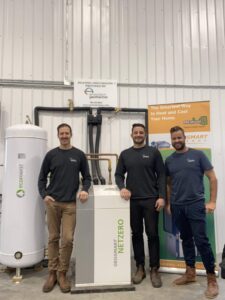
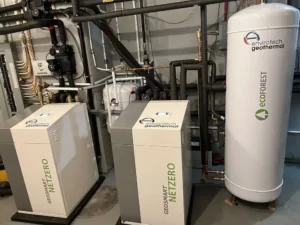
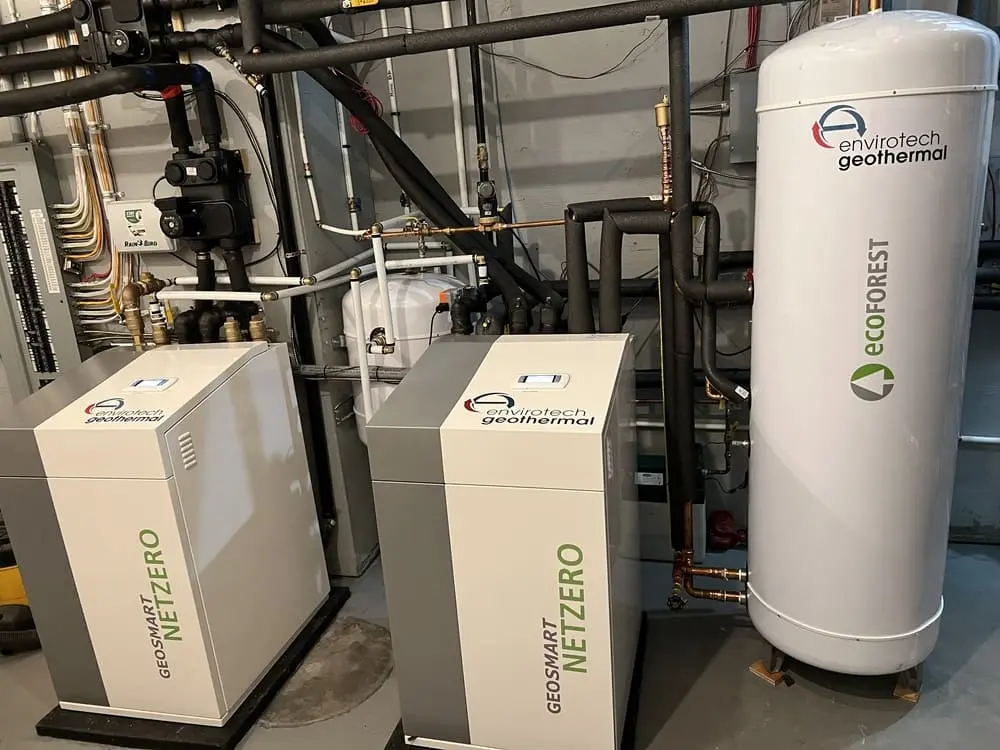
Discuss your acreage projectFeatured project: an Envirotech Geothermal installation in Rocky View County near Calgary. See more in our project portfolio.
Is geothermal in Rocky View County right for your acreage?
Rural properties around Bearspaw, Springbank, and Langdon can offer something many city lots lack: room for a ground heat exchanger. But acreage size alone does not determine whether geothermal is suitable. Soil conditions, usable land, building heat loss, and installation access all matter.
A ground-source heat pump transfers heat between your home and the ground. It draws heat from the ground in winter and can move heat out of the home in summer. For a step-by-step explanation, see how geothermal heating and cooling works.
Replacing propane or electric heat
Compare your actual fuel bills with projected geothermal electricity use. The opportunity depends on fuel prices, equipment efficiency, and your home’s heating demand.
Planning a new home
Designing the loop, mechanical room, and heat distribution early can simplify construction and help match the system to a well-insulated building.
Upgrading an existing home
A retrofit may use compatible ductwork or a suitable hydronic system. Check electrical capacity, airflow, and required water temperatures before choosing equipment.
For existing homes, improving insulation and air sealing can reduce the heating load before equipment is sized. Explore our residential geothermal services for new builds and retrofits.
Ground loop options for rural Alberta properties
A larger lot gives you more choices, but the best ground loop is the one designed for your site’s thermal conditions and your building’s load. Fixed rules about trench length, drilling depth, or minimum acreage cannot replace a site assessment.
Open, accessible land
Horizontal loops
Piping is installed in excavated trenches. Horizontal loops can be economical where usable land and ground conditions allow excavation. Keep the proposed field clear of future buildings and coordinate it with wells, septic systems, utilities, and access routes.
Smaller surface footprint
Vertical loops
Piping is installed in drilled boreholes. Vertical loops may suit constrained sites or properties where horizontal excavation is impractical. Geology, drilling access, and required heat exchange capacity influence the design and cost.
Suitable water body
Pond or lake loops
A submerged loop may be possible in a suitable pond or lake. Water volume, depth, winter conditions, access, and applicable approvals need assessment. A dugout is not automatically a suitable heat source.
Geothermal costs and savings: what to compare
There is no single installed price for geothermal in Rocky View County. A useful quote separates the ground loop, heat pump, indoor connections, electrical work, and site restoration. It should also explain the heating load and performance assumptions behind the recommendation.
What affects installation cost?
- Building demand: floor area, insulation, air leakage, windows, and design heating conditions.
- Loop construction: excavation or drilling, soil and rock conditions, available space, and site access.
- Indoor work: ductwork changes, hydronic compatibility, mechanical room layout, and electrical upgrades.
- Project scope: cooling, domestic hot-water integration, supplementary heat, permits, and restoration.
How to estimate operating savings
Ask for a comparison using a full year of your fuel consumption and current delivered fuel and electricity costs. The geothermal estimate should include heat pump electricity, circulation pumps, and any supplementary heating. Electricity rates and system performance can change, so request more than one cost scenario.
A heat pump’s coefficient of performance (COP) describes heat delivered relative to electricity consumed. A COP of 4 means four units of heat delivered for one unit of electricity at the stated operating conditions. It does not guarantee a 75% reduction in your bill; seasonal performance and energy prices determine the financial result.
For technical background, Natural Resources Canada’s heat pump guide explains why seasonal savings depend on climate, system design, and local energy costs.
From site assessment to geothermal installation
Good design connects the ground loop and heat pump to the building’s needs. Oversizing equipment or choosing a loop from a generic rule of thumb can undermine the result.
- Review the property and bills. Gather house plans, fuel consumption, electricity bills, and details of your current heating system.
- Assess the land. Review available loop space, ground conditions, access, utilities, wells, septic areas, and any water bodies.
- Calculate heating and cooling loads. Select equipment and heat distribution suited to the building, including a plan for peak winter demand.
- Confirm the scope. Agree on the loop design, approvals, electrical work, installation schedule, restoration, and itemized quote.
- Install and commission. Complete loop and equipment installation, testing, controls setup, and a homeowner walkthrough covering operation and maintenance.
Envirotech has designed and installed geothermal systems in Alberta since 2006. The Rocky View County installation shown above is one example of our work near Calgary. Browse our geothermal project portfolio to see rural installations and residential retrofits.
For properties elsewhere in rural Alberta, contact our team with your location and project details to discuss site assessment availability and installation logistics.
Geothermal incentives: check eligibility before budgeting
Programs have different rules for homeowners, businesses, and newly built homes. Confirm current eligibility and any pre-approval requirements before signing a contract or subtracting a rebate from your budget.
CMHC Eco Plus for eligible new homes
CMHC Eco Plus offers a 25% mortgage insurance premium refund for qualifying newly built energy-efficient homes with CMHC-insured financing. Geothermal installation alone does not establish eligibility; the home must meet the program’s energy performance or certification requirements.
Clean Technology Investment Tax Credit
The federal Clean Technology ITC is not a general rebate for homeowners. The CRA’s eligibility guidance identifies qualifying taxable Canadian corporations and specified real estate investment trusts. A business project needs its own eligibility review.
Municipal financing and other programs depend on location, funding, and project requirements. Use confirmed program terms and qualified advice when evaluating an incentive for your property.
Geothermal in Rocky View County: frequently asked questions
Does geothermal work during Alberta’s cold winters?
Yes. Ground-source heat pumps use the ground as their heat source, which is less exposed to outdoor temperature swings. Reliable winter operation depends on correct building load calculations, loop design, equipment selection, and a plan for supplementary heat when needed.
How much land do I need for a horizontal ground loop?
There is no universal minimum acreage. The usable loop area depends on building demand, soil properties, trench arrangement, and setbacks. A large lot with buildings, utilities, or protected areas may still have limited usable space.
Can geothermal replace my propane furnace?
It may be possible. A designer must assess the heating load, existing ductwork, electrical service, loop options, and backup heating needs. Compare projected operating costs with your actual propane consumption before deciding.
Can one geothermal system provide heating and cooling?
Many ground-source heat pumps provide both. The equipment and indoor distribution system must be selected for your requirements. Domestic hot-water support is also possible with suitable equipment, but is not included in every system.
Can I install geothermal in an existing acreage home?
Yes, retrofits are possible where the site and building are suitable. The assessment should review ductwork or hydronic requirements, mechanical space, electrical capacity, and the work needed to connect the ground loop.
How long does a geothermal system take to pay for itself?
Payback varies with the additional installation cost, fuel being replaced, electricity rates, seasonal performance, and any verified incentives. Ask for a property-specific comparison rather than relying on a standard number of years.
For more homeowner questions, visit our geothermal FAQ page.
Your home. Your land. The right design.
Explore geothermal for your Rocky View County property
Building a new acreage home or replacing an existing heating system? Share your location, house plans, and current heating details with Envirotech Geothermal to discuss your options.
Contact Envirotech GeothermalCall 1-866-464-3287Technical and program references: Natural Resources Canada, CMHC, and the Canada Revenue Agency, linked above. Program information checked October 4, 2026.