Edmonton homes · Heating upgrades · Planning checklist
A heating upgrade in Edmonton starts with understanding your home, not choosing an equipment brand. Before you compare quotes, identify what needs to improve: winter comfort, summer cooling, running costs, or an aging system.
These nine questions help you prepare for a useful conversation with a heating professional, compare proposals fairly, and avoid discovering missing work halfway through installation.
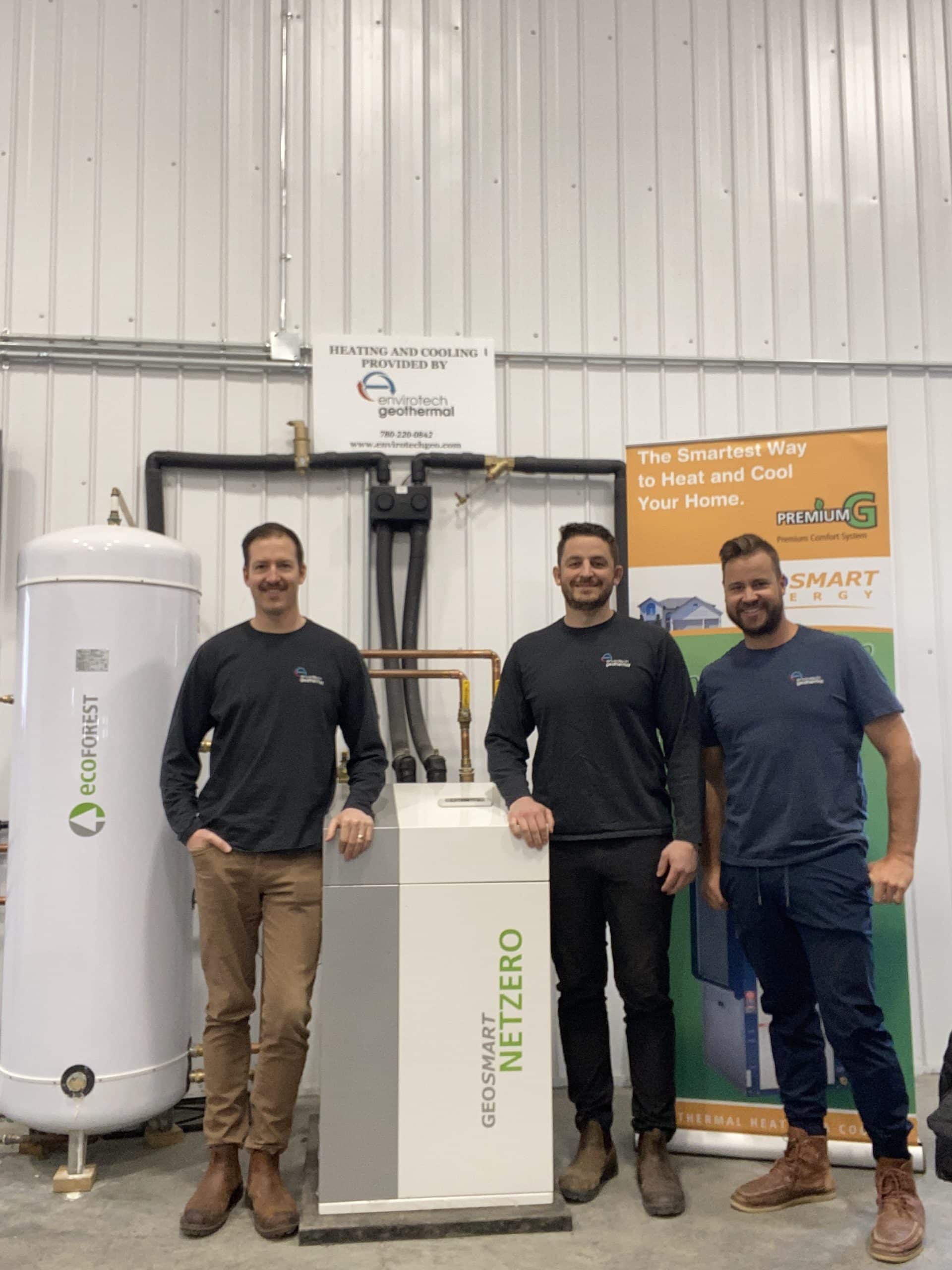
Get the planning checklistFeatured photo: the Envirotech Geothermal leadership team with geothermal equipment. Meet our team and explore our installation portfolio.
1. Does your heating system need repair or replacement?
An unevenly heated home does not always need a new heat source. A blocked return, unsuitable thermostat setting, distribution problem, or building heat loss may be contributing to the discomfort. Ask for an assessment of the cause before deciding what to replace.
Bring the equipment model, approximate age, repair history, and a list of rooms that feel too hot or cold. Describe when the problem occurs: only during colder weather, all winter, or after a renovation. This gives the professional more useful information than “the furnace seems too small.”
If replacement is recommended, ask what it will solve and which comfort problems need separate work. A new unit cannot automatically correct poor insulation or inadequate airflow.
2. What heating and cooling capacity does your home actually need?
Floor area and the capacity of the old equipment are starting points, not a complete sizing method. Two Edmonton homes with similar square footage can have different needs because of insulation, air leakage, windows, and layout.
Ask how the proposed capacity was calculated and whether planned insulation, window, or air-sealing upgrades are included. Natural Resources Canada recommends considering those building improvements when sizing a heat pump.
Our geothermal sizing guide explains why load calculations matter when a ground-source system is being considered.
3. Which heating options are practical for this property?
A useful consultation explains why a system fits your site and goals. It should also explain its limitations. Compare the complete installation rather than treating the heat source as an isolated purchase.
| Option | What to assess |
|---|---|
| Furnace replacement | Fuel supply, venting, ductwork, equipment condition, and whether cooling is a separate requirement |
| Air-source heat pump | Cold-weather output, outdoor-unit location, electrical capacity, indoor distribution, and supplementary heating |
| Ground-source heat pump | Ground-loop space and access, ground conditions, indoor connections, electrical work, and total project cost |
| Hybrid arrangement | Compatibility between heat sources, the switching strategy, controls, and the costs of maintaining both |
For the options Envirotech offers, explore air-source heating and cooling and residential geothermal systems. The geothermal vs. air-source comparison provides more detail for homeowners weighing those two approaches.
4. How will the system meet peak winter demand?
Ask for an explanation of the selected equipment’s heating capacity at the conditions used in the design. For a heat pump, a headline operating-temperature limit does not tell you how much heat it can deliver at that temperature.
The proposal should identify any supplementary heat source, when it operates, and how the controls coordinate it. Also ask how its electricity or fuel use is reflected in the operating-cost estimate.
For geothermal, discuss both the heat pump and ground loop. The loop must be designed for the building’s loads and site conditions; choosing a larger indoor unit alone is not a complete design.
5. Can the existing ductwork or radiant system be reused?
Heating equipment and heat distribution need to work together. In a ducted home, ask whether the existing supply and return paths can handle the required airflow. Request that any duct changes, balancing, or additional outlets appear in the quote.
For hydronic or radiant heating, discuss required water temperatures, zoning, pumps, and controls. Compatibility needs assessment before assuming a new heat pump can simply replace an existing boiler.
Homes with limited space for ductwork may need a different distribution approach. Our High Tech HVAC page introduces another option to discuss with the designer. Suitability depends on the building and the proposed layout.
6. Should the heating upgrade also include cooling?
Think about summer comfort while the heating design is being developed. List upstairs bedrooms, south-facing rooms, and other spaces that become uncomfortable. Ask how the proposed system will deliver cooling to those rooms.
A reversible heat pump can provide cooling, but the indoor equipment, distribution, and drainage still need to support it. Radiant floor heating does not automatically become a suitable cooling system.
For a ground-source proposal, ask which cooling modes are included. Our geothermal cooling guide for Alberta explains active cooling, passive cooling, and the installation details that affect summer performance.
7. Who handles qualifications, permits, and inspections?
Confirm who will perform the work, which qualifications apply, and who is responsible for permits and inspection bookings. Ask for evidence of appropriate insurance and WCB coverage as part of your contractor checks.
Permit requirements depend on the work. Edmonton’s residential heating and ventilating guidance distinguishes heating, ventilation, cooling, and related work. Its Home Improvement Permits page also identifies gas and electrical permits. Confirm the requirements for your exact project before installation begins.
Properties in neighbouring municipalities can follow different processes. Use the authority responsible for the property address, and have permit responsibilities written into the agreement.
8. What is included in the quote and running-cost estimate?
Compare itemized proposals with the same scope. A lower equipment price may leave out electrical work, distribution changes, excavation, restoration, or commissioning that another quote includes.
- Equipment: specified models, capacity, controls, and accessories.
- Installation: indoor connections, outdoor or ground-loop work, and subcontracted tasks.
- Property work: access, protection of finished areas, cleanup, and restoration.
- Project administration: permits, inspections, schedule, and payment milestones.
- Aftercare: testing, warranty coverage, homeowner instruction, and service arrangements.
For running costs, provide a full year of fuel and electricity consumption if available. Ask which energy prices, seasonal performance assumptions, and supplementary-heating use were included. Request an explanation of fixed charges that may remain on the bill.
The Government of Alberta’s contractor-hiring guidance recommends written estimates and clear contracts. Keep scope changes and their costs documented rather than relying on a verbal understanding.
9. How will the installation be tested and maintained?
Ask what commissioning checks the installer will complete and what records you will receive. The handover should cover controls, normal operation, maintenance requirements, and who to contact if performance changes.
Clarify equipment warranty terms separately from installation labour coverage. Find out whether registration, scheduled maintenance, or other conditions apply. Keep model numbers, manuals, inspection records, and commissioning documents together.
For a geothermal installation, discuss ground-loop testing and the operating information relevant to the installed system. Do not assume that every system has the same service schedule.
Your Edmonton heating upgrade checklist
- Your address, house plans if available, and details of planned renovations.
- Current heating equipment, maintenance records, and recent utility consumption.
- A room-by-room list of winter and summer comfort concerns.
- Your priorities, budget range, and preferred timing.
- Questions about distribution, electrical work, permits, warranties, and aftercare.
Ask each provider to explain how the proposed design addresses those points. Keep the answers with the itemized quote so you can compare proposals consistently.
Heating upgrade questions homeowners often ask
Should I replace my furnace with the same size?
Not automatically. Ask for a sizing assessment that considers the home’s current condition and planned improvements. The existing equipment may not represent today’s heating needs.
Can a heat pump work with existing ducts?
Possibly. The equipment and ducts need to be checked for airflow, capacity, and compatibility. Any required modifications should be included in the proposal.
Is geothermal possible on a smaller Edmonton lot?
It may be possible with a suitable loop design and installation access. Available surface area is only one factor. Ground conditions, utilities, access, and the building’s loads also need assessment.
How much does a heating upgrade cost?
The cost depends on the equipment, building, distribution changes, electrical work, and project scope. An itemized site-specific quote is more useful than a generic price range.
Do I need permits for a heating upgrade?
The required permits depend on the address and the work involved. Confirm the project requirements with the municipality and identify permit and inspection responsibilities in the agreement.
Start with your home’s needs
Plan your heating upgrade with Envirotech
Share your location, current heating system, and comfort goals. Our team can discuss geothermal and other available heating and cooling options and help identify the next assessment steps.
Discuss your projectPlanning references: the linked City of Edmonton permit pages, Government of Alberta contractor-hiring guidance, and Natural Resources Canada heat-pump guidance. Requirements and equipment suitability should be confirmed for the actual installation.